Slowly, Slowly

Quiet, slow moving, solitary days bring plenty of time for reflection and to learn about one’s self.

Since retiring nearly six weeks ago I have moved over to the slow lane of life. My husband spends fourty-ish hours of the week at work, nearly all of my friends have day jobs, and fatigue from my MS nearly always keeps me home. The first few weeks of retirement were borderline catatonic. I was still recovering from my latest exacerbation of MS and only had the energy to do small necessities required to sustain life. The past couple of weeks, however, have typically brought an hour or two per day when I have enough energy to actually fill my time with something other than sitting.

Slowly, very slowly a couple of simple pleasures from my distant past have started to find traction again. My Grandma Lois encouraged me to develop an interest in bird watching during my childhood. She always had a few feeders in her backyard and taught me how to look for distinguishing characteristics between the varieties of birds which came to eat. She kept a pair of binoculars and a bird field guide beside her back-facing windows and I spent many a happy hour watching the ever-changing line up at the feeders – Cardinals, Goldfinches, Juncos, House Finches, Carolina Wrens, Baltimore Oriels, Purple Martins…the list goes on and on. I especially remember being proud that she was so smart. She never had to double check the field guide for names like I did, not even for the rarer ones that didn’t come very often, like the Summer Tanagers or Pine Siskins.

Todd noticed a pair of House Finches early last week nesting in one of the bushes outside our house. This singular incident sent me down memory lane as I recalled all the happy memories of bird watching at Grandma’s. So, late last week I put up a couple of bird feeders in the backyard and, sure enough, I am just as excited now as I was then to see the lineup of different birds come and go. The first birds to the feeders were Goldfinches, House Finches, and Juncos. Memories of Grandma flooded over me and swelled my heart for this exact trio were always her favorite birds. I particularly remember her being excited to see Goldfinches at the feeders each season and her telling me that Juncos seemed to be the happiest and friendliest of all the birds. My favorite so far this week has been a male and female pair of Eastern Bluebirds. They are simply stunning as they sport a vibrant and dazzling blue on top of their bodies, a solid white belly, and rusty throat, chest, and thighs. To me, nothing says Missouri like our gorgeous state bird. Better yet, the time quickly passes as I watch the parade of hungry birds come and go and listen to their varied songs fill the trees surrounding our house.

The other simple pleasure I never actually knew I enjoyed is cleaning. While growing up my sisters and I used to call my Mom a “dirt digger”. She didn’t always relish cleaning but once she got started she meant business. She would get between tiles with a toothbrush in the bathroom and kitchen or would use a toothpick to dig out gunk from the cracks between the pieces of her car’s interior. I think both my sister and I enjoy carrying on this serious-minded cleaning because (a) we take pleasure passing the moniker “dirt digger” back and forth between us and (b) it keeps Mom close in our hearts. I never clean without thinking of her and that reason alone elevates the menial tasks of cleaning to a loved and treasured occupation. Although I tire out easily and quickly these days, I always want to remain a keen dirt digger, even if it is just for a few minutes at a time.

And so, slowly, slowly, I am finding ways to fill all the time on my hands with both old as well as rediscovered interests. I’m looking forward to uncovering additional diversions to fill in the otherwise uneventful hours of my day. I’m in no rush, I have all the time in the world.
MS: Talk About Confusing and Competing Interests!

If you spend much time with me you will learn that I am nothing if not thorough, especially when it comes to managing the ups and downs of life. When something comes up, especially health related, I tend to pour hours into studying and researching all available information on the topic. Somehow this helps me process the problem and deal with the situation. Although my coping mechanism can be really annoying to others and, I’ll own, might even seem a wee bit obsessive, it helps me make better decisions.

In 1993 when the first disease modifying drug, Betaseron, came out, my name was entered in the lottery for the few injections that were available to the public before the company caught up producing enough for everyone who wanted to use it. My name came up in mid-’94 and I have been on one of the now 15 disease modifying drugs ever since. In most circumstances, having choices is a good thing, but choosing between the options of so many different drugs for MS is an overwhelming, cumbersome, and even dangerous task. Most of them have some very significant possible side-effects and none, save the first three developed, have long-term studies describing how much they may actually affect the course of the disease or the negative health risks that might affect one’s life expectancy. Adding to the confusion is the fact that that no one knows how any of them work to curb the disease, largely because it’s unknown what causes it in the first place. What is known is that it’s an autoimmune disease whereby the immune system attacks itself. There are a lot of theories about how it initiates, but the strongest theories center around some kind of interplay between genetics, exposure to a viral agent, susceptibility, and even low Vitamin D levels.

Nevertheless, these drugs offer hope to the 2.9 million people living around the world with MS, nearly 1 million of whom live here in the United States. The drugs promise life altering results with catchy slogans like, “Put Relapsing Remitting MS in the Background”, “Hey, MS, Take This, You’re Messing With the Wrong Woman”, “Imagine What You Could Do With Fewer Relapses”… These catch phrases and slick sales patter make my blood boil! They make promises that are not real and make it seem like MS is nothing to worry about anymore. Nothing could be farther from the truth!

In light of the fact that the MS triggers are largely not understood, it isn’t very surprising to learn that no one knows how any of the disease modifying drugs work, either. They just do…for some…for a while. Thirteen of the drugs are exclusively for use in the Relapsing Remitting form of MS (RRMS), typically the first stage people go through who have the disease (about 80-85% of those diagnosed initially have RRMS).
The National Multiple Sclerosis Society defines RRMS as “characterized by clearly defined attacks of new or increasing neurologic symptoms, followed by periods of partial or complete recovery (remissions). During remissions, all symptoms may disappear, or some symptoms may continue and become permanent. However, there is no apparent progression of the disease during the periods of remission.” The drugs for RRMS have been shown to slow disease progression (but don’t stop it), make flair-ups less damaging to the nerves affected (but irreversible damage still occurs), and reduce the number of flare-ups over time (but you will still have disease activity) by about 1/3 to 1/2 of what it would have been without the drugs. Research has also revealed that use of these drugs pushes accrued disability further down the line for most people. However, up to 95% of people with RRMS progress to Secondary Progressive MS (SPMS) within 20 years regardless of the disease modifying treatments available. SPMS, as defined by the National Multiple Sclerosis Society, is the stage of disease progression that most often follows RRMS in which there is a progressive worsening of neurologic function (accumulation of disability) over time. One drug has been approved for use both with people who have worsening RRMS that have not responded to other treatments as well as for those who have moved into SPMS. The last disease modifying drug is exclusively for those who have Primary Progressive MS (PPMS). PPMS is characterized by worsening neurologic function from onset of the disease with continued, worsening accruement of disability. Make no mistake, the development of these medications is a wonderful thing. I have been on several of them myself and advocate that others should consider taking them, especially for people who have RRMS. But the bottom line is, there is NO cure for MS, just look at the numbers I placed in bold above.

What does all of this mean? It means nearly all people living with MS will eventually reach a significant level of disability. Regardless of this fact and because drug companies have done a fantastic job of marketing their drugs, Joe and Jill public most likely think that those who have MS just need to take some injections, pills, or infusions so their disease will be under control with nothing more to worry about. I cannot tell you how many people over the years have told me about “the new drug for MS.” They are very well meaning, I appreciate their interest, and I love that MS is on their radar, but they don’t know anything beyond the self-promoting words in the ad they heard or the blurb mentioned on the news about “a breakthrough in MS.” If the communal impression about MS is that there “are drugs for it” and there have been “breakthroughs”, then where will the impetus for pushing for more research and funding for more advancements in treatments and to actually find a cure come from? Moreover, will those who are newly diagnosed and their families be able to read past the glossy slogans of their disease modifying drug to see the real and likely long range outlook of MS? Will they feel like an enigma or a failure when the bubble starts to burst on all the pretty promises made from the literature the drug companies sent with the first dosage pack?

Like all other diseases, syndromes, and disabilities, the rest of the world at large will only care when they come in contact with and get to know someone living with the realities of a handicap. Change comes when you finally understand. I decided a long time ago not to try to keep my MS a secret. Maybe it was the educator/therapist in me, but I realized that if I didn’t share my struggles that come directly from my MS, no one I know will care to want to work to find a cure. There is still a lot of work to be done to cure MS. One of the popular slogans to raise MS awareness is a pretty good summation of my thoughts about the disease: Believe in, Dream of, and Hope for a cure!

Drop Everything! #ThisIsMS Awareness Week

If I had to have a bumper sticker permanently affixed to my back, it would probably say, “Don’t follow in my footsteps, I bump into walls.” Actually, I don’t just “bump” into them, I tend to fall into them. Lately, I also lean on them when I walk to help keep my balance, but that’s neither here nor there. “I’m not drunk, I have Multiple Sclerosis” or “My bruises and scars tell a story, the story of my MS” are two common sayings in the MS community. Clumsiness and coordination issues are typical problems with MS. I noticed mine started about 8 or 9 years ago, but they gained momentum from 2017 onward and have really spiked in the past five months.

After I dropped the coffee can a week or so ago and was cleaning up millions of grounds from the kitchen floor, I got to thinking I should document all the things I drop in a single day. Since it is #MSAwarenessWeek , I thought it was as good of a time as any to share something MS related from my typical day.

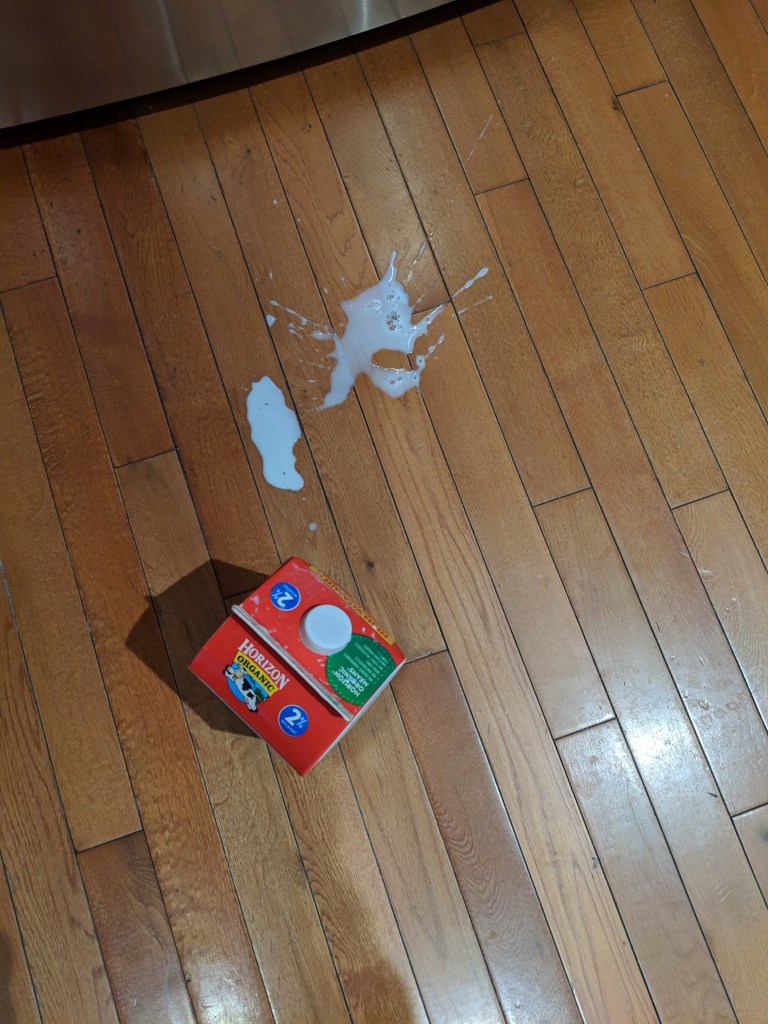
So, the following are pictures of all the things I dropped that day, starting with the milk I got out to add to my coffee that morning. We ended up having to go old school and open the container like kids do from school milk cartons. When the carton fell, it somehow managed to tear the plastic rim of the pour spout away from the surrounding cardboard.

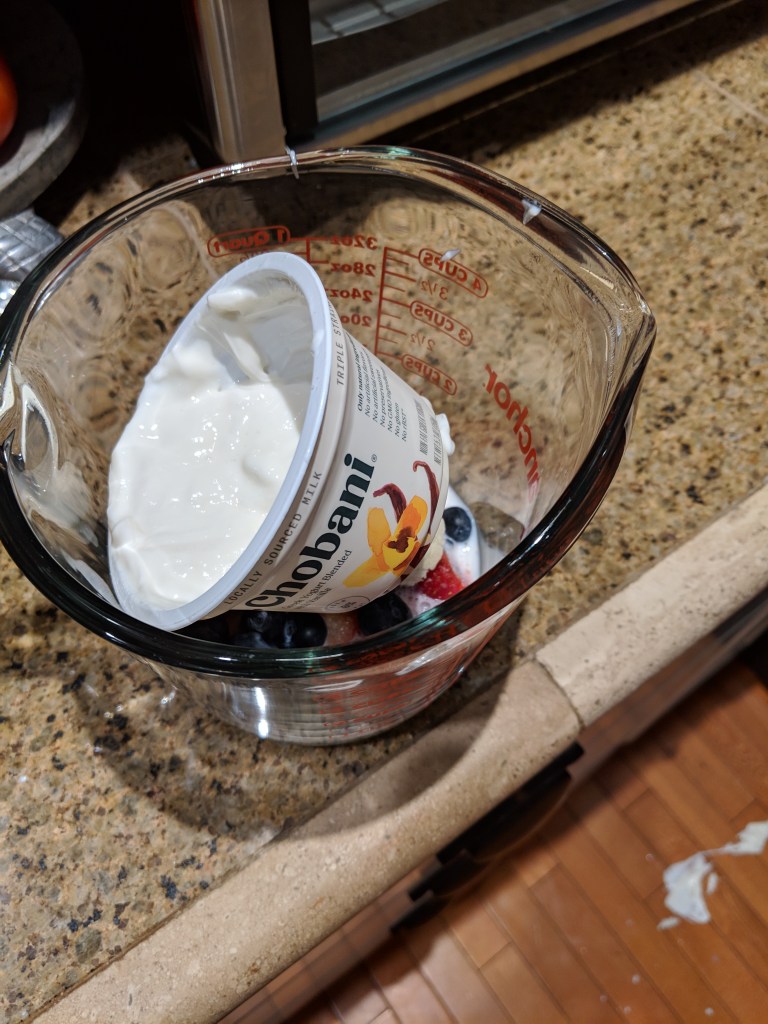
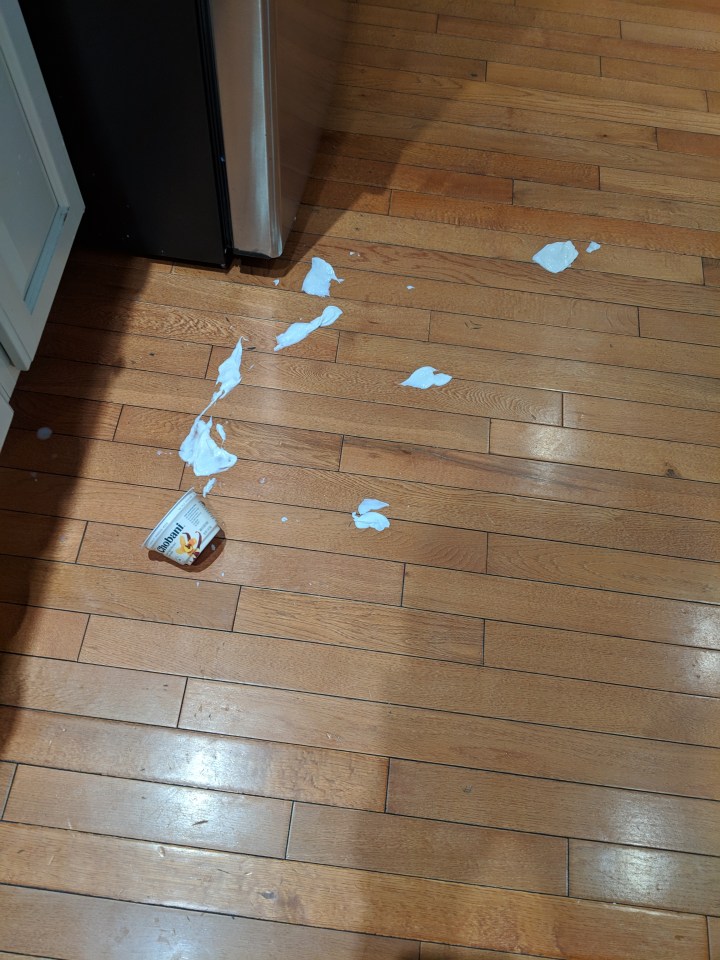
Next, I tried to make a fruit smoothie for breakfast. By the time I had finished there was probably only half of the yogurt left in the container because I dropped it…twice!

I really do try to be careful, but klutziness just happens wherever I go! {sigh} I’d like to say my gawkiness happens most when I am distracted or multi-tasking, and that I can control it by just focusing a bit more, but that’s not true. It does occur more often when I am tired, although it hits on less tired days, too.

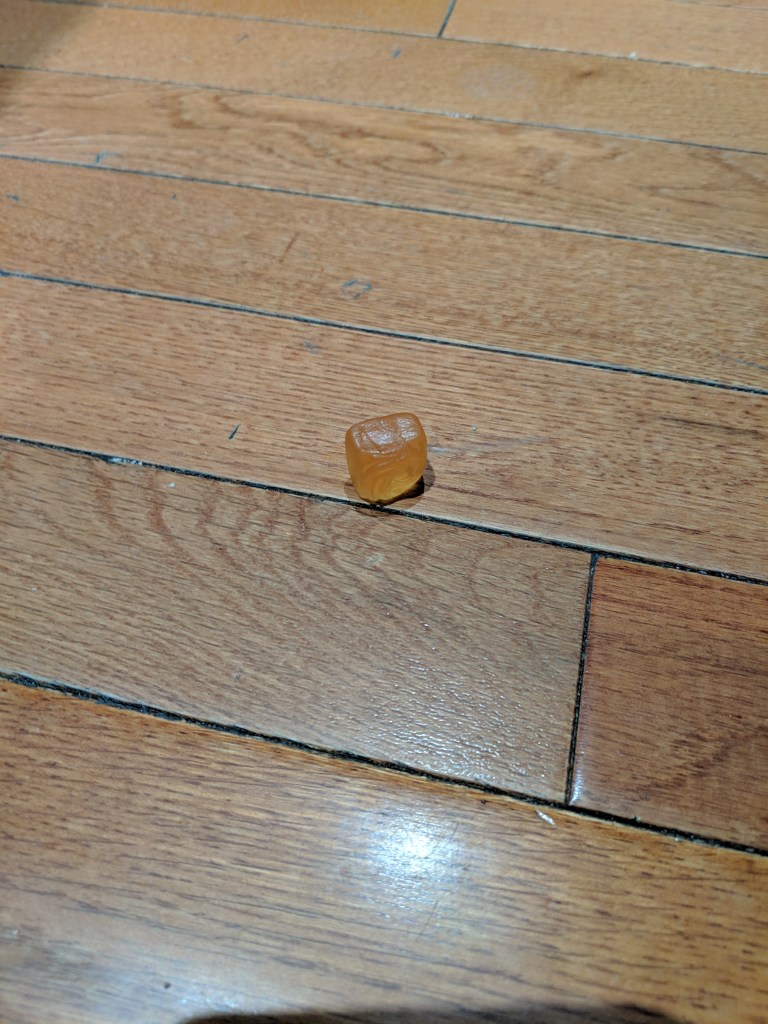
I did eventually manage to finish making and eating the smoothie and moved on to taking my daily fiber gummies. I try to eat a healthy, balanced diet, but MS has a way of creeping into absolutely every part of life. When you can’t walk or exercise every day and you have to take medication to manage muscle spasms and excessive spasticity, it’s hard to keep your gut moving. I imagine you can work out the rest. Anyway, this peach flavored goo never made it to my mouth.

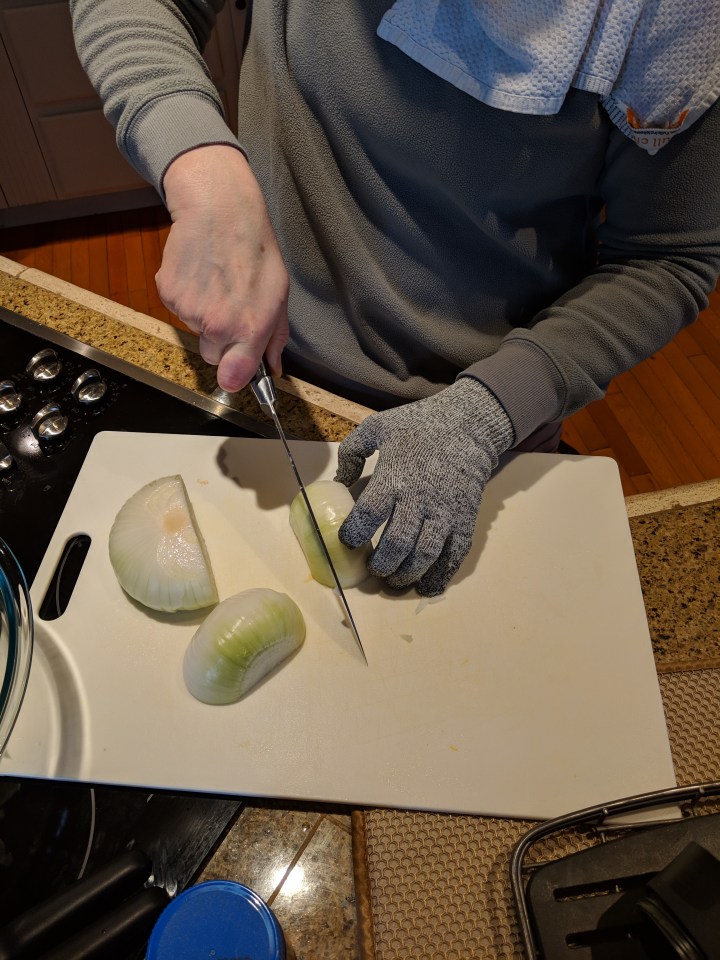
The rest of the day progressed in a somewhat graceful manner, but I decided to err on the side of caution when making dinner. Todd bought me these handy-dandy, cut-resistant gloves a few years ago to keep my digits safe. I thought they were a good idea, too. The P.A.s at urgent care were starting to check me over more closely and asking questions about my well-being after stitching me up on two separate occasions for knife wounds.

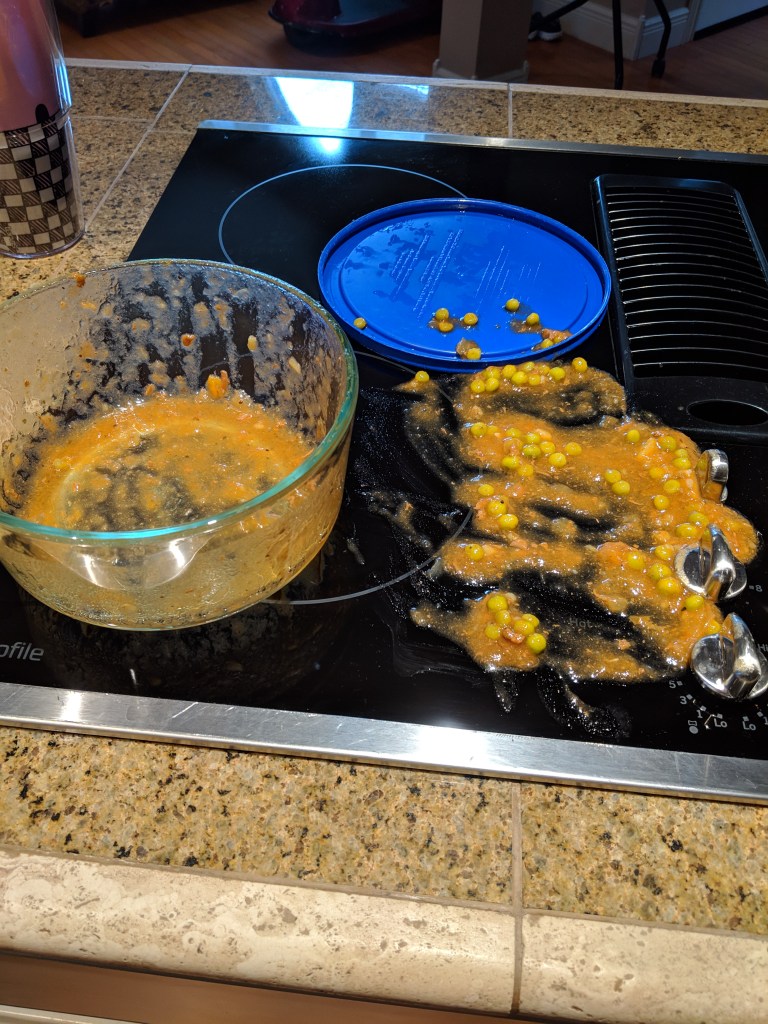
I’d made quite a large batch of beef stew that night and divided it up between a few single serving containers to put in the freezer and a larger container to keep some for dinner the next night. Thankfully, there was just a little bit left in this bowl before I ham-fisted stew all over the cooktop.

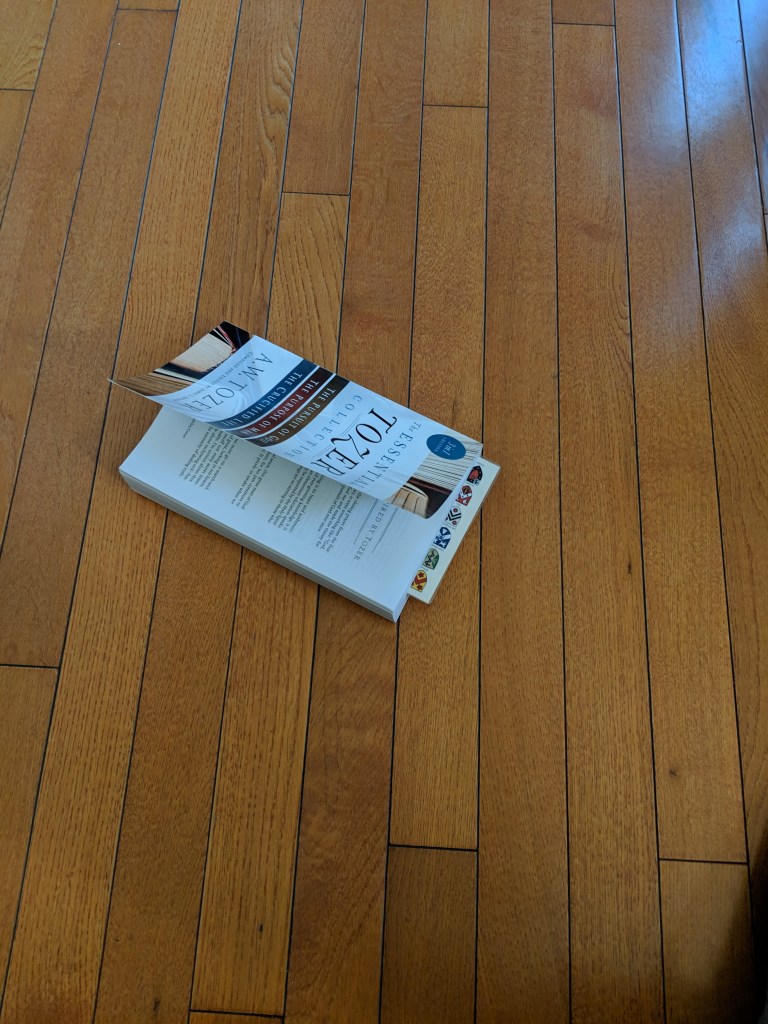
Despite the messy kitchen episodes, it had been a decent day in other rooms of the house. I frequently drop my toothbrush as I’m brushing my teeth and fling toothpaste all over the mirror, counter, sink, my clothes, and my face. I usually drop the TV remote at least once a day, but had managed okay this day. However, after dinner I decided to do a little reading. I dropped the book not once, not twice, but three times.

I officially became old eight years ago when I noticed I had to take my glasses off to read. I do have bifocals, but I usually prefer to read without them. As a result, I take my glasses on and off several times during the day. I dropped these exactly five times during the course of the day, which was about 40% of the time I messed with them. Two of these were during the time I was reading.

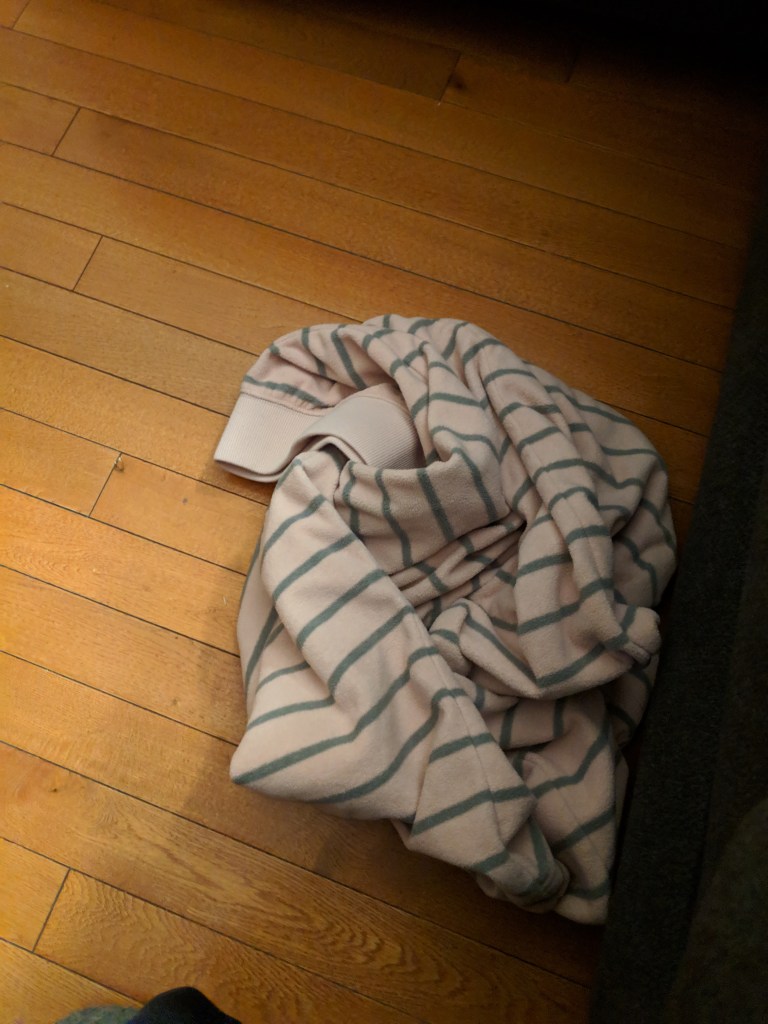
Before I went to bed that night I helped Todd fold the laundry. My P.J. bottoms ended up on the floor two times before Todd grabbed them from my hands and folded them up and put them away. I was really getting tired by then, and I think he knew they would end up crumpled on the floor a couple more times, so he saved me the effort and did it himself.

The National Multiple Sclerosis Society http://www.nationalmssociety.org wrote the following for the first sentence describing MS Awareness Week 2019, “Every day, people living with MS do whatever it takes to move their lives forward despite the challenges.” Even though I’ve only been writing my blog for a little over a month, I’ve described my disease course and symptoms in several of my posts. Clumsiness and coordination problems are just a small part of my daily challenges. I encourage you to check out the National Multiple Sclerosis Society’s website this week and consider making a donation. Or, if you would rather wait, Todd will be riding for me in the MS 150 this fall. He will be signing up soon and you can donate to his team in my honor. They are so much closer to finding a cure now than when I was diagnosed 29 years ago, I think it is possible I will live to see them find out what causes it and possibly even a cure.