Slowly, Slowly

Quiet, slow moving, solitary days bring plenty of time for reflection and to learn about one’s self.

Since retiring nearly six weeks ago I have moved over to the slow lane of life. My husband spends fourty-ish hours of the week at work, nearly all of my friends have day jobs, and fatigue from my MS nearly always keeps me home. The first few weeks of retirement were borderline catatonic. I was still recovering from my latest exacerbation of MS and only had the energy to do small necessities required to sustain life. The past couple of weeks, however, have typically brought an hour or two per day when I have enough energy to actually fill my time with something other than sitting.

Slowly, very slowly a couple of simple pleasures from my distant past have started to find traction again. My Grandma Lois encouraged me to develop an interest in bird watching during my childhood. She always had a few feeders in her backyard and taught me how to look for distinguishing characteristics between the varieties of birds which came to eat. She kept a pair of binoculars and a bird field guide beside her back-facing windows and I spent many a happy hour watching the ever-changing line up at the feeders – Cardinals, Goldfinches, Juncos, House Finches, Carolina Wrens, Baltimore Oriels, Purple Martins…the list goes on and on. I especially remember being proud that she was so smart. She never had to double check the field guide for names like I did, not even for the rarer ones that didn’t come very often, like the Summer Tanagers or Pine Siskins.

Todd noticed a pair of House Finches early last week nesting in one of the bushes outside our house. This singular incident sent me down memory lane as I recalled all the happy memories of bird watching at Grandma’s. So, late last week I put up a couple of bird feeders in the backyard and, sure enough, I am just as excited now as I was then to see the lineup of different birds come and go. The first birds to the feeders were Goldfinches, House Finches, and Juncos. Memories of Grandma flooded over me and swelled my heart for this exact trio were always her favorite birds. I particularly remember her being excited to see Goldfinches at the feeders each season and her telling me that Juncos seemed to be the happiest and friendliest of all the birds. My favorite so far this week has been a male and female pair of Eastern Bluebirds. They are simply stunning as they sport a vibrant and dazzling blue on top of their bodies, a solid white belly, and rusty throat, chest, and thighs. To me, nothing says Missouri like our gorgeous state bird. Better yet, the time quickly passes as I watch the parade of hungry birds come and go and listen to their varied songs fill the trees surrounding our house.

The other simple pleasure I never actually knew I enjoyed is cleaning. While growing up my sisters and I used to call my Mom a “dirt digger”. She didn’t always relish cleaning but once she got started she meant business. She would get between tiles with a toothbrush in the bathroom and kitchen or would use a toothpick to dig out gunk from the cracks between the pieces of her car’s interior. I think both my sister and I enjoy carrying on this serious-minded cleaning because (a) we take pleasure passing the moniker “dirt digger” back and forth between us and (b) it keeps Mom close in our hearts. I never clean without thinking of her and that reason alone elevates the menial tasks of cleaning to a loved and treasured occupation. Although I tire out easily and quickly these days, I always want to remain a keen dirt digger, even if it is just for a few minutes at a time.

And so, slowly, slowly, I am finding ways to fill all the time on my hands with both old as well as rediscovered interests. I’m looking forward to uncovering additional diversions to fill in the otherwise uneventful hours of my day. I’m in no rush, I have all the time in the world.

MS: Talk About Confusing and Competing Interests!

If you spend much time with me you will learn that I am nothing if not thorough, especially when it comes to managing the ups and downs of life. When something comes up, especially health related, I tend to pour hours into studying and researching all available information on the topic. Somehow this helps me process the problem and deal with the situation. Although my coping mechanism can be really annoying to others and, I’ll own, might even seem a wee bit obsessive, it helps me make better decisions.

In 1993 when the first disease modifying drug, Betaseron, came out, my name was entered in the lottery for the few injections that were available to the public before the company caught up producing enough for everyone who wanted to use it. My name came up in mid-’94 and I have been on one of the now 15 disease modifying drugs ever since. In most circumstances, having choices is a good thing, but choosing between the options of so many different drugs for MS is an overwhelming, cumbersome, and even dangerous task. Most of them have some very significant possible side-effects and none, save the first three developed, have long-term studies describing how much they may actually affect the course of the disease or the negative health risks that might affect one’s life expectancy. Adding to the confusion is the fact that that no one knows how any of them work to curb the disease, largely because it’s unknown what causes it in the first place. What is known is that it’s an autoimmune disease whereby the immune system attacks itself. There are a lot of theories about how it initiates, but the strongest theories center around some kind of interplay between genetics, exposure to a viral agent, susceptibility, and even low Vitamin D levels.

Nevertheless, these drugs offer hope to the 2.9 million people living around the world with MS, nearly 1 million of whom live here in the United States. The drugs promise life altering results with catchy slogans like, “Put Relapsing Remitting MS in the Background”, “Hey, MS, Take This, You’re Messing With the Wrong Woman”, “Imagine What You Could Do With Fewer Relapses”… These catch phrases and slick sales patter make my blood boil! They make promises that are not real and make it seem like MS is nothing to worry about anymore. Nothing could be farther from the truth!

In light of the fact that the MS triggers are largely not understood, it isn’t very surprising to learn that no one knows how any of the disease modifying drugs work, either. They just do…for some…for a while. Thirteen of the drugs are exclusively for use in the Relapsing Remitting form of MS (RRMS), typically the first stage people go through who have the disease (about 80-85% of those diagnosed initially have RRMS).
The National Multiple Sclerosis Society defines RRMS as “characterized by clearly defined attacks of new or increasing neurologic symptoms, followed by periods of partial or complete recovery (remissions). During remissions, all symptoms may disappear, or some symptoms may continue and become permanent. However, there is no apparent progression of the disease during the periods of remission.” The drugs for RRMS have been shown to slow disease progression (but don’t stop it), make flair-ups less damaging to the nerves affected (but irreversible damage still occurs), and reduce the number of flare-ups over time (but you will still have disease activity) by about 1/3 to 1/2 of what it would have been without the drugs. Research has also revealed that use of these drugs pushes accrued disability further down the line for most people. However, up to 95% of people with RRMS progress to Secondary Progressive MS (SPMS) within 20 years regardless of the disease modifying treatments available. SPMS, as defined by the National Multiple Sclerosis Society, is the stage of disease progression that most often follows RRMS in which there is a progressive worsening of neurologic function (accumulation of disability) over time. One drug has been approved for use both with people who have worsening RRMS that have not responded to other treatments as well as for those who have moved into SPMS. The last disease modifying drug is exclusively for those who have Primary Progressive MS (PPMS). PPMS is characterized by worsening neurologic function from onset of the disease with continued, worsening accruement of disability. Make no mistake, the development of these medications is a wonderful thing. I have been on several of them myself and advocate that others should consider taking them, especially for people who have RRMS. But the bottom line is, there is NO cure for MS, just look at the numbers I placed in bold above.

What does all of this mean? It means nearly all people living with MS will eventually reach a significant level of disability. Regardless of this fact and because drug companies have done a fantastic job of marketing their drugs, Joe and Jill public most likely think that those who have MS just need to take some injections, pills, or infusions so their disease will be under control with nothing more to worry about. I cannot tell you how many people over the years have told me about “the new drug for MS.” They are very well meaning, I appreciate their interest, and I love that MS is on their radar, but they don’t know anything beyond the self-promoting words in the ad they heard or the blurb mentioned on the news about “a breakthrough in MS.” If the communal impression about MS is that there “are drugs for it” and there have been “breakthroughs”, then where will the impetus for pushing for more research and funding for more advancements in treatments and to actually find a cure come from? Moreover, will those who are newly diagnosed and their families be able to read past the glossy slogans of their disease modifying drug to see the real and likely long range outlook of MS? Will they feel like an enigma or a failure when the bubble starts to burst on all the pretty promises made from the literature the drug companies sent with the first dosage pack?

Like all other diseases, syndromes, and disabilities, the rest of the world at large will only care when they come in contact with and get to know someone living with the realities of a handicap. Change comes when you finally understand. I decided a long time ago not to try to keep my MS a secret. Maybe it was the educator/therapist in me, but I realized that if I didn’t share my struggles that come directly from my MS, no one I know will care to want to work to find a cure. There is still a lot of work to be done to cure MS. One of the popular slogans to raise MS awareness is a pretty good summation of my thoughts about the disease: Believe in, Dream of, and Hope for a cure!

Hurry Up and Wait

As promised, here’s the low down on the New Shower So Amy Doesn’t Fall and Break Her Neck update. After three weeks of just sleeping on our mattress on the floor of our front room, we are not only ready to return to our bedroom but have also discovered we are not as young as we once were. Beds have frames and box springs for a reason. All these aches and pains are for the love of sleeping with two cats and for one very allergic nephew. We can’t allow our cats in the back rooms of the house because that is where our nephew sleeps when he comes to stay with us. Well yes, we are just that nutty over BOTH our cats and our nephew!

The end of last week saw the shower framed up with electric wires dangling here and there from the ceiling.

Dust absolutely everywhere!!!

The textured marble pan is in along with some of the inside and outside drywall. They also finished up all the electrical and plumbing bits and bobs Wednesday of this week. Both of the guys are “retired” contractors in their 70s who “like to stay busy.” They earned their pay Wednesday coming in and out hauling materials and going under the house countless times on that drizzly, wet day with near gale force winds. Bless them!

Nice and tidy.

They said they were coming back on Monday. There’s still more drywall to hang, mud, and sand; fixtures to put on; marble to install; and the glass door and window to hang. I don’t know if it will be ready by next Friday or not. Bets anyone?

Drop Everything! #ThisIsMS Awareness Week

If I had to have a bumper sticker permanently affixed to my back, it would probably say, “Don’t follow in my footsteps, I bump into walls.” Actually, I don’t just “bump” into them, I tend to fall into them. Lately, I also lean on them when I walk to help keep my balance, but that’s neither here nor there. “I’m not drunk, I have Multiple Sclerosis” or “My bruises and scars tell a story, the story of my MS” are two common sayings in the MS community. Clumsiness and coordination issues are typical problems with MS. I noticed mine started about 8 or 9 years ago, but they gained momentum from 2017 onward and have really spiked in the past five months.

After I dropped the coffee can a week or so ago and was cleaning up millions of grounds from the kitchen floor, I got to thinking I should document all the things I drop in a single day. Since it is #MSAwarenessWeek , I thought it was as good of a time as any to share something MS related from my typical day.

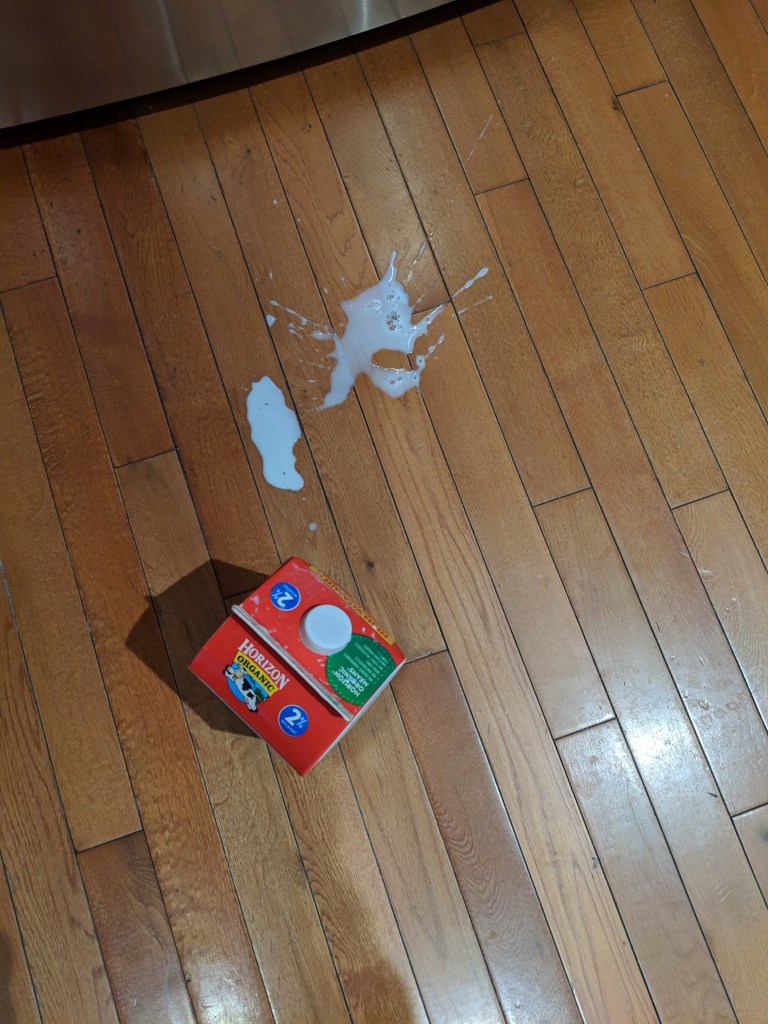
So, the following are pictures of all the things I dropped that day, starting with the milk I got out to add to my coffee that morning. We ended up having to go old school and open the container like kids do from school milk cartons. When the carton fell, it somehow managed to tear the plastic rim of the pour spout away from the surrounding cardboard.

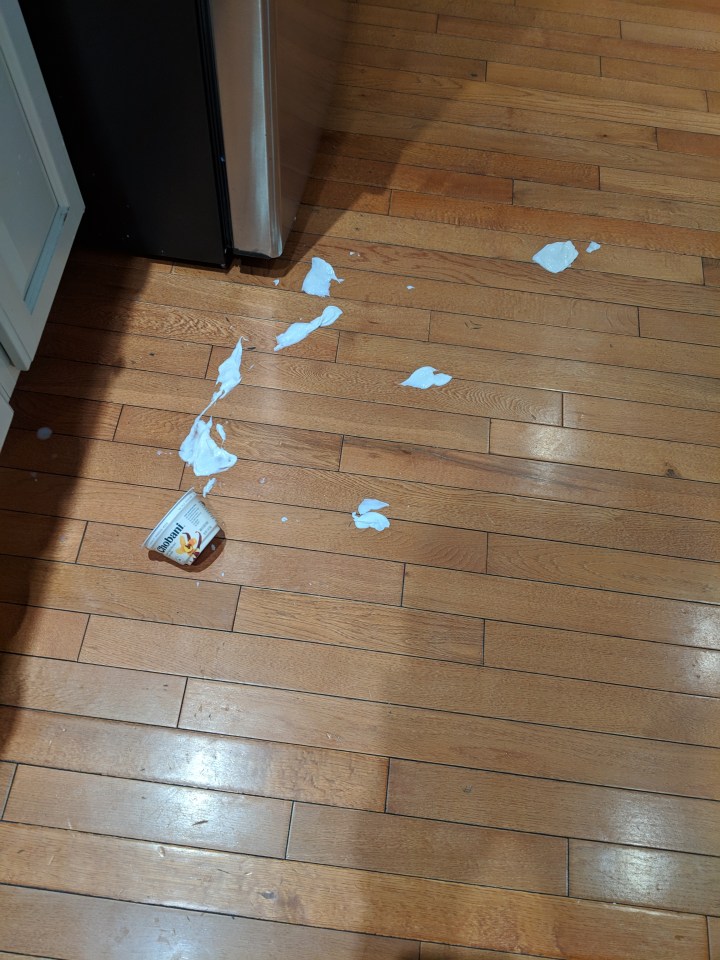
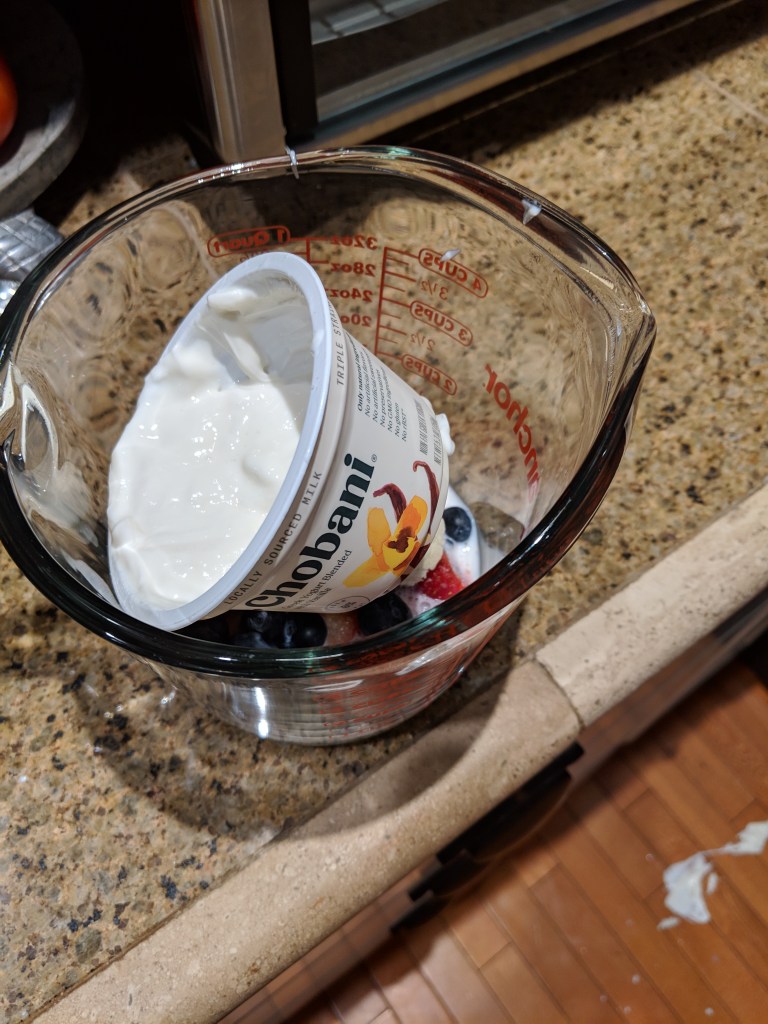
Next, I tried to make a fruit smoothie for breakfast. By the time I had finished there was probably only half of the yogurt left in the container because I dropped it…twice!

I really do try to be careful, but klutziness just happens wherever I go! {sigh} I’d like to say my gawkiness happens most when I am distracted or multi-tasking, and that I can control it by just focusing a bit more, but that’s not true. It does occur more often when I am tired, although it hits on less tired days, too.

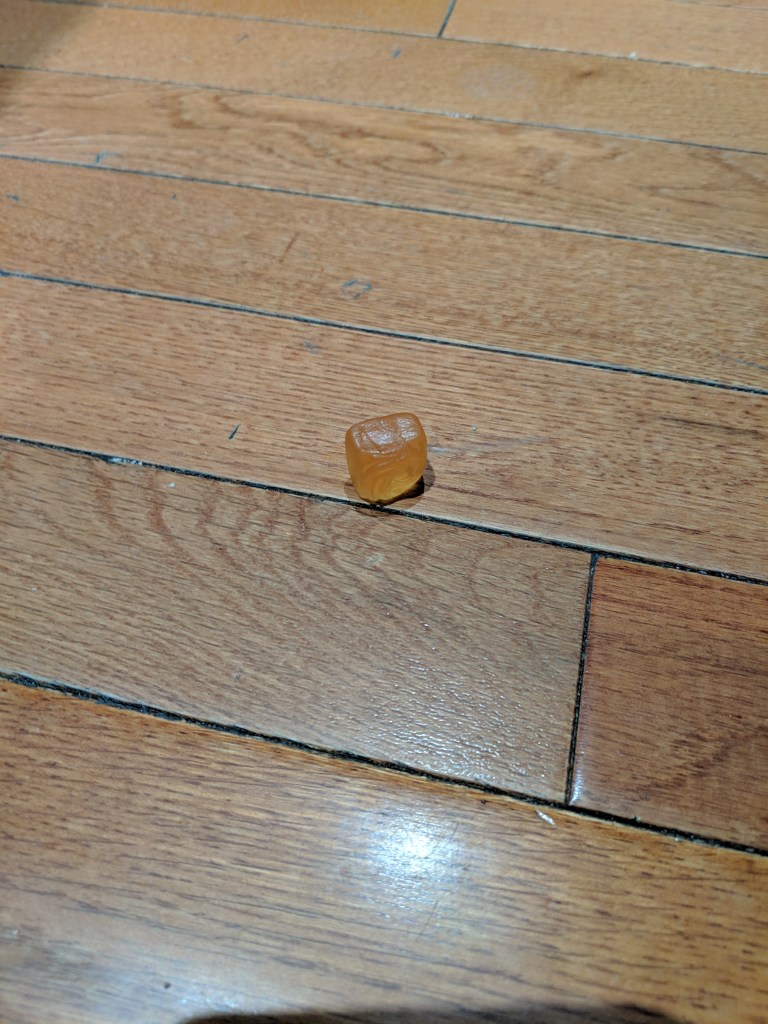
I did eventually manage to finish making and eating the smoothie and moved on to taking my daily fiber gummies. I try to eat a healthy, balanced diet, but MS has a way of creeping into absolutely every part of life. When you can’t walk or exercise every day and you have to take medication to manage muscle spasms and excessive spasticity, it’s hard to keep your gut moving. I imagine you can work out the rest. Anyway, this peach flavored goo never made it to my mouth.

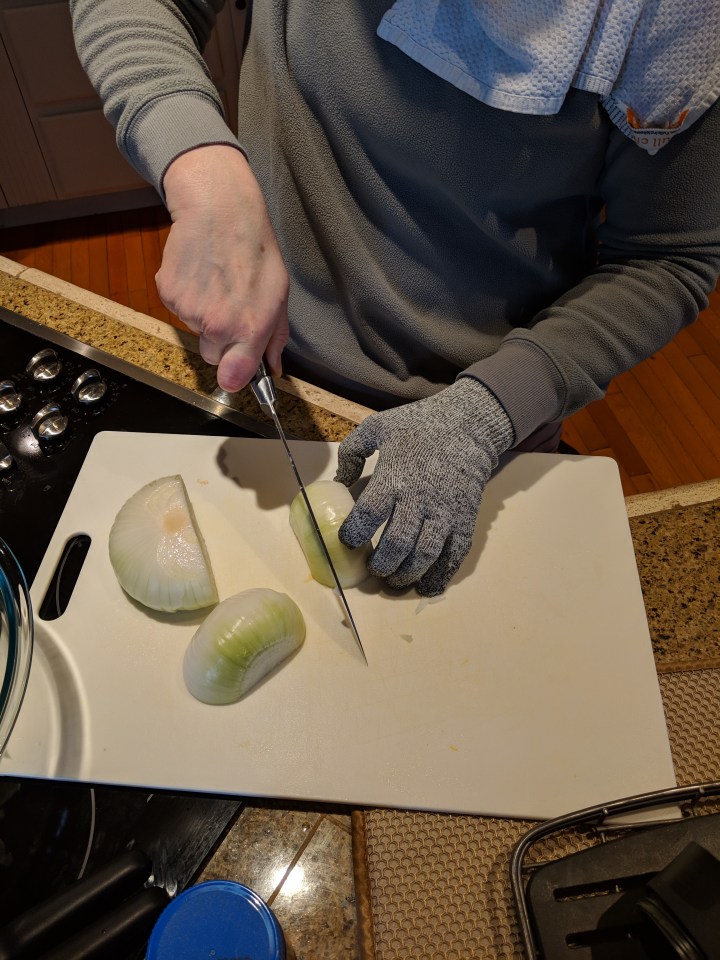
The rest of the day progressed in a somewhat graceful manner, but I decided to err on the side of caution when making dinner. Todd bought me these handy-dandy, cut-resistant gloves a few years ago to keep my digits safe. I thought they were a good idea, too. The P.A.s at urgent care were starting to check me over more closely and asking questions about my well-being after stitching me up on two separate occasions for knife wounds.

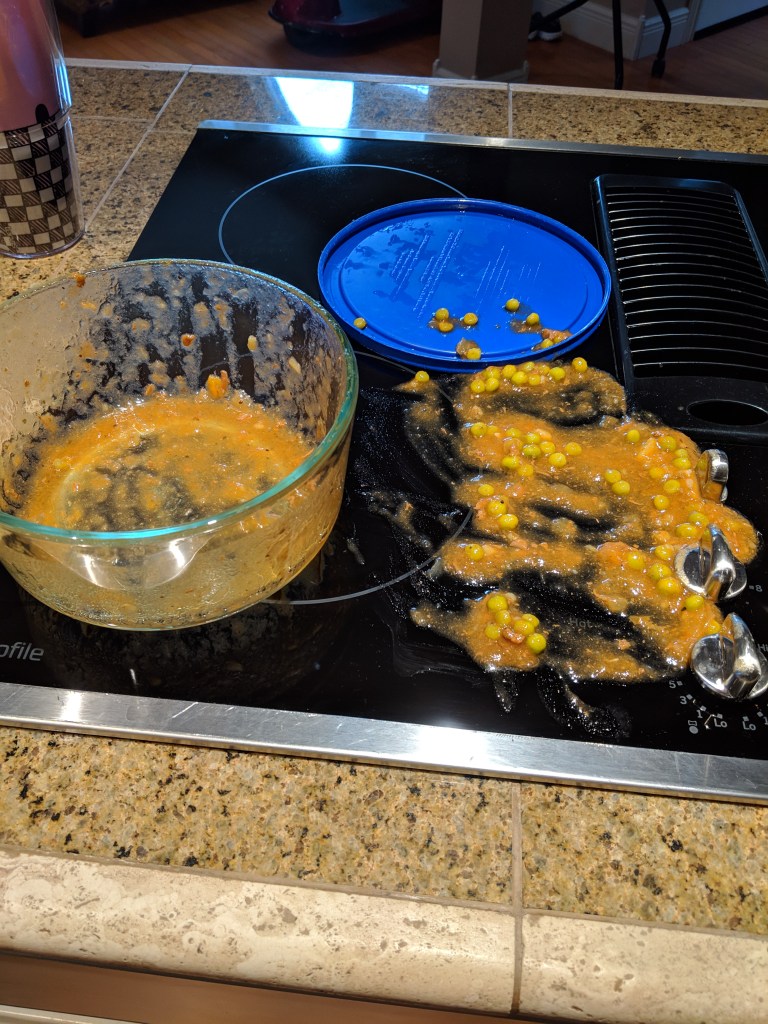
I’d made quite a large batch of beef stew that night and divided it up between a few single serving containers to put in the freezer and a larger container to keep some for dinner the next night. Thankfully, there was just a little bit left in this bowl before I ham-fisted stew all over the cooktop.

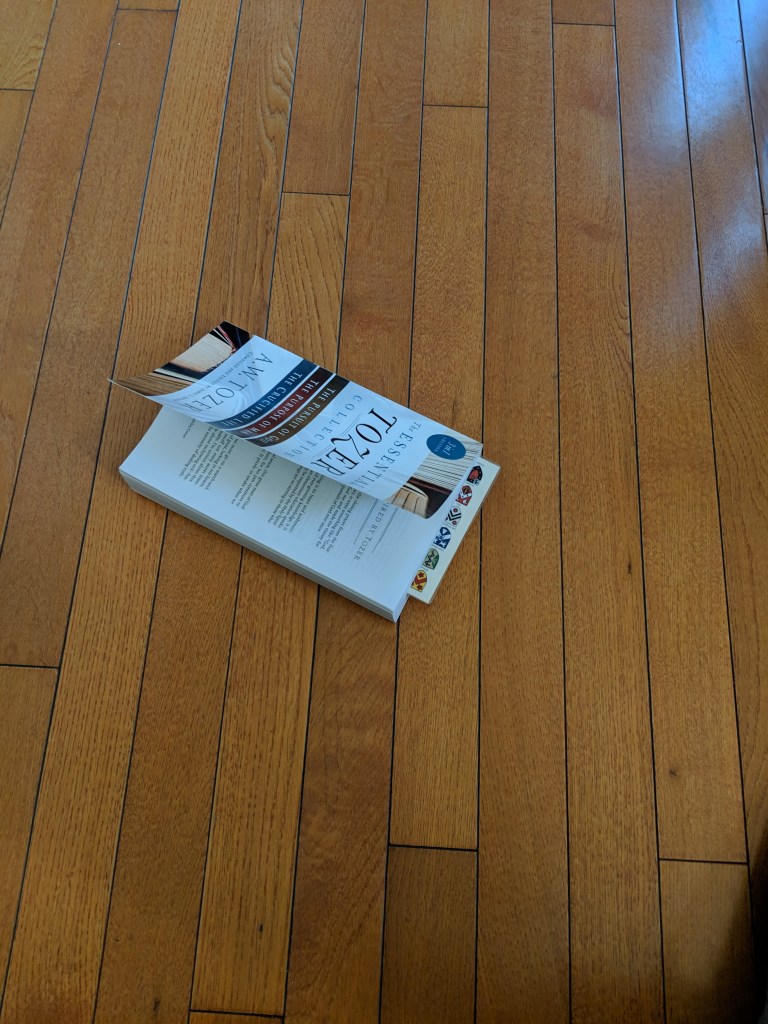
Despite the messy kitchen episodes, it had been a decent day in other rooms of the house. I frequently drop my toothbrush as I’m brushing my teeth and fling toothpaste all over the mirror, counter, sink, my clothes, and my face. I usually drop the TV remote at least once a day, but had managed okay this day. However, after dinner I decided to do a little reading. I dropped the book not once, not twice, but three times.

I officially became old eight years ago when I noticed I had to take my glasses off to read. I do have bifocals, but I usually prefer to read without them. As a result, I take my glasses on and off several times during the day. I dropped these exactly five times during the course of the day, which was about 40% of the time I messed with them. Two of these were during the time I was reading.

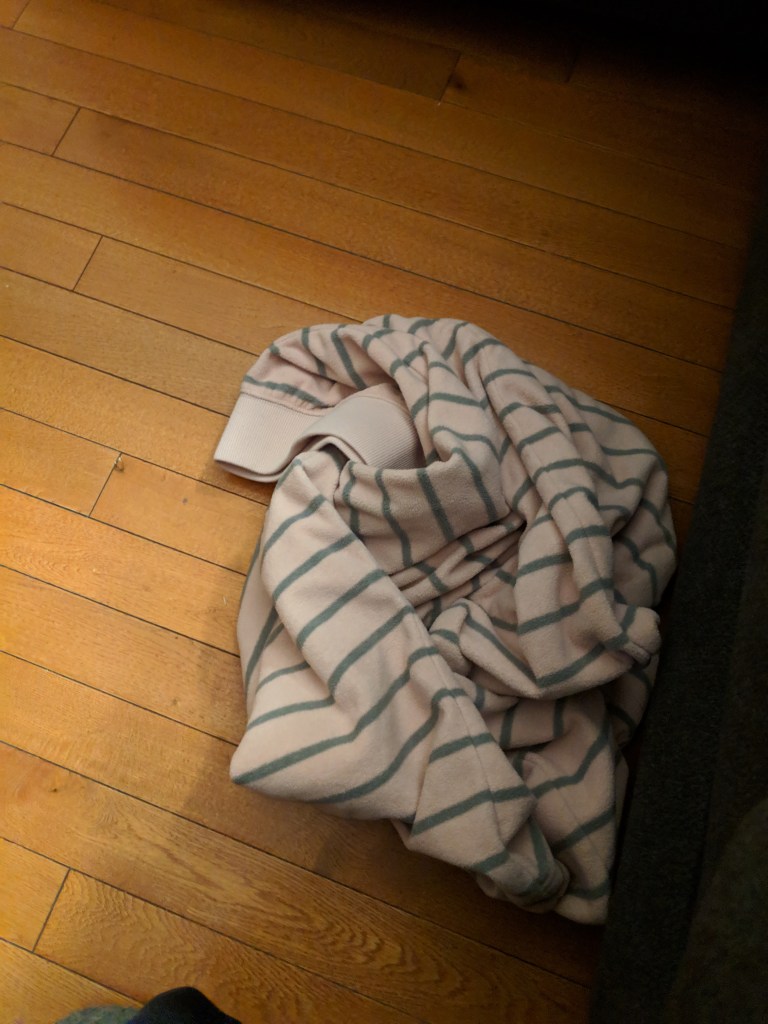
Before I went to bed that night I helped Todd fold the laundry. My P.J. bottoms ended up on the floor two times before Todd grabbed them from my hands and folded them up and put them away. I was really getting tired by then, and I think he knew they would end up crumpled on the floor a couple more times, so he saved me the effort and did it himself.

The National Multiple Sclerosis Society http://www.nationalmssociety.org wrote the following for the first sentence describing MS Awareness Week 2019, “Every day, people living with MS do whatever it takes to move their lives forward despite the challenges.” Even though I’ve only been writing my blog for a little over a month, I’ve described my disease course and symptoms in several of my posts. Clumsiness and coordination problems are just a small part of my daily challenges. I encourage you to check out the National Multiple Sclerosis Society’s website this week and consider making a donation. Or, if you would rather wait, Todd will be riding for me in the MS 150 this fall. He will be signing up soon and you can donate to his team in my honor. They are so much closer to finding a cure now than when I was diagnosed 29 years ago, I think it is possible I will live to see them find out what causes it and possibly even a cure.

Life as a Yo-Yo

Lord, I am a yo-yo
And you hold the string.
When I am low 
You pull me up again,
Sometimes it seems 
You don’t pull hard
‘Cause I don’t go up very far.
Then, I hang
Suspended in time
While the string
Slowly unwinds.
One day I’ll make it 
To the top,
Keep pulling LORD,
Please don’t’ stop!
Problems get in my way,
The string gets a little knot,
But with you in control, LORD,
The knot comes untied.
Keep on pulling LORD,
Help me to climb
This long and hard string of life.
For when I’ve made it 
To the top
I know I’ve made it to YOU!

~Donna Golden

Up and down, dangling and spinning, rewinding and trying again only to drop like an anchor to the end of the string again. A life lesson in a yo-yo.

Yesterday I had zero energy and could barely walk, I had to ride my scooter just to get to the bathroom or to the kitchen for a drink. For no discernible reason, I walked better and had more energy today. Monday I tried to dust the house but was only able to get the TV done before petering out. Today I cleaned the kitchen AND was able to dust the living room and part of the computer room before fatiguing.

The same is true of life in general. Just when you have finished your hard earned degree the market crashes and jobs are scarce. Right after you finished remodeling and making your house just right, your spouse gets transferred and you have to sell up and move to a different state. The child you’ve long prayed for is finally born but she has a difficult medical condition.

The apostle Paul’s life was a yo-yo. At times he was amid crowds who responded positively to the Good News of Christ and was surrounded by those who loved him and supported him in the congregations he helped establish. But we also know he barely escaped an assassination plot and was held for years in prison before eventually being killed for his faith in Jesus as the Son of God. He told the church at Philippi that he knew what it was to be in need or to have plenty and had “learned the secret of being content in any and every situation, whether well fed or hungry, whether living in plenty or in want” (Ph 4:12). Taking it a step further, he told the saints in Rome that he rejoiced in his sufferings (Ro 5:3).

How? Paul explained himself further in Romans 5:3-5 when he said, “…suffering produces perseverance; perseverance, character; and character, hope. And hope does not disappoint us, because God has poured out his love into our hearts by the Holy Spirit, whom He has given us.” Paul knew his suffering produced something, it wasn’t for naught. Every time he suffered through difficult circumstances and learned how to persevere, his personal character grew. When we successfully endure through struggles it encourages us, and not only ourselves but others, too, and this produces hope.

Like the string of a yo-yo, our lives rise and fall between the constant interchange of perseverance through suffering and the encouragement and growth that inevitably follow. There are two brands of yo-yos in this life – Hope and Despair. You can actually chose the one to which you want to attach your string of life. You can ride through life’s ups and downs with apathy and dishonor leading to a life of despair, or you can attach your string, like Paul did, to Hope. As Paul said, “hope does not disappoint us, BECAUSE God has poured out His love into our hearts!”

Time on My Hands

I often think of my Grandma Lois. By the time of my earliest memories of her she had already retired as a teacher and had lost my grandfather, Frank, in an automobile accident. She never learned to drive a car and, since she lived in a small town, there was no public transportation available to her. She rode the Older Adults Transportation Services – OATS Bus occasionally to get to doctors appointments, but had to register a week in advance in order to use the service. Our little town did not have a good sidewalk system back in the ’70s and ’80s for pedestrians and, besides that, she had trouble with her legs which prevented her from walking more than a few minutes at a time. We would swing by to pick her up to go to church on Sunday mornings and evenings as well as Wednesday nights and my Dad always took her to the grocery store on Saturday mornings with us, but other than that she was basically home-bound.

I spent a lot of time with grandma growing up and was always excited to stay with her because she knew how to keep my sisters and I busy with things we didn’t really do at our house. She had a small house but it was filled with wonder. There were birds to watch at her many feeders and a field guide by which to recognize them; there were flowers to plant and water; she had a marvelous collection of children’s books that I loved reading through again and again; she always had something cooking and she took the opportunity to teach us how to work in the kitchen using cool things like a meat grinder or cookie-press; she sewed and quilted and let us watch as she made beautiful things; she had pegboards with houses, trees, cars, and lamp posts to make into a city as well as my Dad’s old Lincoln Log set from the ’50s and a round, tall cylinder of Tinker Toys with which to build. She let us play “beauty shop” with her hair and ate who knows how many Red Hots as “medicine” when we played doctor with her.

But I also knew she had many more days when we were not there to keep her entertained or, probably and more likely, her to entertain us. It’s from these days I have reflected and learned so much over the past few years. She had nothing but time on her hands yet she was never bored or angry about being stuck at home. I was there often enough that I was able to see her living her daily routine and have been able to piece together how she was able to use her time at home instead of killing it or resenting it. Now that I am semi – home bound with my MS, I have an ever growing gratitude and love for her example of how to live a full life at home within a small, daily confinement.

Here are the essential elements I saw her use and have employed myself in order to keep motivated, growing, learning, and busy at home.

  1. Set a relatively consistent schedule of the six essential activities of the day: waking up, breakfast, lunch, dinner, bathing, and going to bed. Fixing these six activities to set times allows you to build a skeleton time frame for adding other things to your day. It also keeps you oriented to time, an important anchor for cognitive awareness.
  2. Keep yourself connected to the outside world. I do this each morning after breakfast by scrolling through various news sites, checking the weather, checking in on the social media platforms I use, and writing cards, sending texts, or calling friends who have been ill or could use some encouragement. Doing this helps foster a sense that you are still engaged with people and emotionally a part with others.
  3. Make time for God. This is one of my favorite times of the day. Begin with a prayer asking God to give you insight and understanding, move on to an in depth Bible study, allow for time to reflect and write down what you’ve learned, and end with a good long prayer full of thanksgiving, praise, a summary of what you learned, petitions on behalf of others and then yourself, forgiveness, and help to do something good for His kingdom today. Doing this will keep you emotionally, mentally, and spiritually grounded for whatever you are facing in your life. It’s a wonderful feeling to be in communion with God through Jesus Christ!
  4. Get involved in a hobby or interest. There’s only so much TV you can watch without feeling like the world is seriously trying to dumb you down. I’ve set my heart on learning German and try to devote some time to chipping away at it each day. I also read, listen to books on tape, crochet, cook, work puzzles, and obviously, I’ve recently started writing this blog. Having a variety of interests to choose from has helped to keep my days from feeling stale and boring. These activities have also given me something to look forward to each day, an event.
  5. Plan time to rest. Yeah, I know it sounds silly, but it’s an essential part of living life with MS and I bet you could benefit from a little down time, too.
  6. Have a regular routine and/or cycle of chores to accomplish each day. This is important to help you feel like you are contributing to the running of your home and gives you a sense that you are needed and useful. Laundry, dishes, feeding pets, making the bed, cleaning house a little each day, taking out the trash, getting the mail…you don’t have to do all of these every day but set an achievable goal for yourself.

Perhaps you have other ideas on this topic that would be useful for others. I would love for you to share them in the comments.

Best regards,

Amy

Part 2: It Takes Both Rain and Sunshine To Make a Rainbow

In part 1 of this two-part post I told you the essential story of my Multiple Sclerosis to date or, if you will, the daily “rain” in my life. Now, if I stopped there all I could ever expect would be perpetual, devastating floods that would eventually drown the whole of me into an ocean of hopelessness. But, to the praise of His glory, this is not where things end!

God has created each of us to be more than just simple, physical creatures satisfied by nothing more than the air we breath and the food and water we intake. He has created us in His image and in doing so we reflect, albeit to a much more limited and imperfect degree, His palette of emotions as well as a spirit which will live on once we leave this life. Therefore, all of us have emotions which, when properly trained, can transcend the physical realities of our circumstances. We also have a spirit within us that longs for something, someone greater than ourselves. Our spirits cry out to be restored to fellowship with our Creator; wanting and needing to rise above the physical needs of our bodies. My spirit found the one, true, living God when I was 13 years old and from that moment on faith in God and Christ, His Son, has filled and overflowed my life with joy.

I don’t have complete control over how my MS affects my body nor the vicissitudes from day to day of what it will or will not let me do. However, I do have control over how I allow my emotions and my faith to run my life. Psalms 19:9 says, “The fear of the Lord is pure, enduring forever”. Did you know that “the fear of the Lord” is an Old Testament expression meaning “reverential trust”? Yes, once we realize Who God is and His holiness, we will fear Him because we realize who we are. We are not holy and knowing Him reveals our sinfulness. That is why Proverbs 9:10 tells us that “the knowledge of the Holy One is understanding”, it reveals our need. But once we yield to Him and become His by putting on Christ His Son through baptism, our faith is based upon a reverential trust in God to keep His promises. Once we have trusted in who He says He is and the promises He has made, we go the next logical step by submitting to Him. The most beautiful and wonderful example of this submission is by our Lord and Savior, Jesus Christ. Of Him it is said, “Sacrifice and offering you did not desire, but a body You prepared for Me; with burnt offerings and sin offerings you were not pleased. Then I said, “Here I am – it is written about Me in the scroll – I have come to do Your will, O God” (He 10:5-6). Further, the Hebrew writer describes the moment when the time of Christ’s passion came. Hebrews 5:7-9, “During the days of Jesus’ life on earth, He offered up prayers and petitions with loud cries and tears to the One Who could save Him from death, and He was heard because of His reverent submission. Although He was a son, He learned obedience from what He suffered and, once made perfect, He became the source of eternal salvation for all who obey Him.”

Of course Jesus trusted God, He had just been in heaven with Him and had left Him to come here. But look what that trust enabled Jesus to do! He reverently submitted. And so, that is what I will do. I will live each and every day trying my best to reverently trust and submit to God my Father.

Trusting and submitting to God has benefits that far outweigh my physical limitations. He offers the “fruit” or “gift” of His Spirit, which Galatians 5:22-23 lists as, “love, joy, peace, patience, kindness, goodness, faithfulness, gentleness, and self-control.” The Holy Spirit has been given to us as our “Helper” or “Counselor” (John 14:16) and His “fruit” or “gift” has everything to do with how to manage my emotions when living with this disability. These are how I will stay emotionally strong through whatever MS or life throws my way. I will love the things MS has taught me. I will find joy in the things I can still do. I will find peace in the knowledge that God understands my limitations. I will practice kindness and goodness because others may be experiencing greater problems than I am. I will be thankful for God’s steadfast faithfulness to me and pledge to show mine to Him out of gratitude and because there may be others who would be encouraged by my example. I will let his gentleness toward me influence my thoughts, feelings, and actions toward others. I will allow all the other components of this great Spirit given gift to learn and practice self-control.

God is the sunshine mentioned in the title. The rain of our broken lives mingled with the sunshine (or Sonshine 😉) creates the most beautiful of rainbows. After all, what was a rainbow given as a reminder of in the first place (Genesis 9:16)? A promise!

Part 1: It Takes Both Rain and Sunshine to Make a Rainbow

I’ve struggled with how to write this. I have attempted it now for two days on several occasions but the words just weren’t there. I’ve had 2 persistent questions I can trace the first origins of to the fall of 2001. Although I’d had three full blown flair-ups of my MS over the previous 11 years after my diagnosis, all the symptoms disappeared after the relapses and I couldn’t tell any discernible difference physically between before and after they took place. But 2001 marked a change. After the dust from my relapse that year had settled, I noticed I fatigued more easily and quickly than usual (the number 1 symptom of most MSers). I also began to have some issues with my bladder (also a highly common symptom) and my coordination was just not like it had been before. That’s when the seeds of “What’s going to happen to me in the future?” and “Am I going to have to stop working?” first started stewing in my mind.

Well, from 2001 onward to the present time, I have had 1-2 exacerbations a year with the exception of 2007 and last year, 2018. My symptoms have been typical for MS and, with regard to walking, the following have come, gone, and some have stayed: poor balance and coordination, muscle cramps related to too much muscle tone in my calves and thighs, tingling, heaviness in my legs, the feeling of pins and needles in my legs and feet, total numbness making it nearly impossible to know if I have moved my legs, and a total inability to walk at all. Other parts of my body have been affected, too. I’ve had numbness, the feeling of pins and needles, tingling, and heaviness in my arms, face, and torso as well as problems with dizziness, coordination, bladder and bowel dysfunction, and word finding problems. But worse than all of these has been the fatigue related to MS. The fatigue is unique and is caused by all the damage done along the nerve tract over the years to the myelin, or coating that wraps the nerves to help the signal move along quickly, just like the insulation around a wire that carries electricity. When myelin is destroyed, the signal from the brain to the different parts of the body can’t get through very well, or sometimes at all. Your body has to work extra hard to make the signal get to the parts of your body that have been affected. All this extra work requires energy. Your nervous system can’t work without electrical impulses so it will use however much energy it needs to get the job done. Of course, no one has a limitless well of energy. Therefore, when the majority of your energy store is being used up just to communicate signals in your body necessary to function, it leaves a very shallow pool from which to draw from to do everything else.

It’s very hard to describe the fatigue of MS. It doesn’t have anything to do with how much sleep I get or how much I rest during the day. Sometimes I wake up after a good night’s sleep and, first thing in the day, the fatigue is so great I can hardly hold my head up and I can feel the energy ebbing away just by blinking my eyes. Other days I wake up and seem to have energy to walk and go about my activities but then, WHAM! In a matter of seconds fatigue hits and I have to stop immediately and rest for hours in order to recover enough energy just to sit up again or to walk across the room.

Over the course of my professional years working as a speech language pathologist (SLP), I have had to make accommodations for my MS in order to continue doing my job. First, I had to stop working with little kids because they just required too much energy and would wear me out quickly. Next, I had to stop travelling so much while working in a private practice because driving made me tired. This was followed by having to change jobs to one where I didn’t have to travel at all, then I started using a scooter at work, twice I had to reduce my hours, and finally I took medical retirement 2 1/2 years ago . Since then, I have worked at a local university 2, six hour days per week, in the fall and spring semesters, supervising graduate students in the clinic as they learned how to do therapy.

I just resigned my position at the university this past Friday. I had been struggling with another down turn of my MS since October, 2018 which ultimately culminated in a full-blown exacerbation mid-January, forcing me to miss the first two weeks of the semester as I took and then recovered from huge doses of IV steroids. I returned to work 2 weeks ago but I knew pretty quickly the last hurrah had come. The energy required to get dressed and ready to go, drive, walk in the building, meet with my students, observe their sessions, edit their documentation, get back to my car, and drive home left me absolutely bankrupt of energy. The other 5 days of the week when I wasn’t working had to be spent trying to recoup enough energy to make it back to do 2 more days the next week. I could barely walk independently, get in and out of the bath/shower safely on my own, make it to the toilet… and my other symptoms, such as poor balance, clumsiness, word finding issues, et cetra were worsening.

So, within the space of just a few months, both of the questions I started wondering about way back in 2001 have finally found an answer. As I’ve mentioned in another post, my neurologist and I think I’ve walked to the edge of Relapsing Remitting MS and am staring at the prospect of Secondary Progressive MS a lot more closely than what feels comfortable. I guess that answers the question of what my future is going to look like. I’m so thankful it’s taken 29 years for that answer to come. The 2nd question came to it’s ultimate, final answer Friday.

It’s hard, but not unexpected. I’m sad, but not devastated. I’m still trying to get my head wrapped around it all.

But this is not the end of everything and it isn’t the end of my fight with MS. I’m still alive and I’ll lay out my battle plans in the next installment of this 2 part story.

To the praise of His glory,

Amy